


I was noodling around on a sad Friday afternoon, looking at how many wallets promise “multi-chain” support but silently trade off safety for convenience. It bugged me. Honestly, a lot of wallets slap on every RPC they can find and call it multi-chain. That’s not the same as doing the hard work of true multi-chain risk management—gas quirks, approval hygiene, transaction simulation, and cross-chain UX all matter. If you use DeFi seriously, these details change whether you keep your gains or feed them to a contract you barely inspected.
So let’s be practical. This piece walks through what a sophisticated DeFi user should expect from a multi-chain wallet, how to assess risks, and how to integrate with dApps without becoming a testnet statistic. I’ll call out concrete checks, design patterns, and red flags you can use when evaluating wallets and dApp connections.
Why “multi-chain” is a claim that needs context
Multi-chain can mean a lot of things. At the simplest level it means: “I can switch the RPC chain displayed in the UI.” That’s the baseline. But real value comes when a wallet handles chain-specific edge cases: correct gas estimation, transaction simulation per chain, safe approval flows, and integrated tooling for bridging and cross-chain state awareness.
Think of it like travel: one thing to have a passport, another to know local customs, currency quirks, and which neighborhoods are safe. A wallet that’s serious understands each chain’s operational quirks and provides guardrails.
Core risk dimensions to evaluate
When sizing up a multi-chain wallet, score it across these categories.
- RPC and node hygiene — Does the wallet allow custom RPCs? Does it run its own nodes or rely on third-party providers? If third-party, are requests proxied and anonymized? A malicious or buggy RPC can lie about chain state.
- Transaction simulation — Can it run a dry-run of your exact signed transaction (including pre-state) and show the result? Simulation reduces costly mistakes and failed transactions.
- Approval and allowance management — Does it show token approvals per contract and allow fine-grained revoke or limit actions? Unlimited approvals are a persistent beginner trap.
- MEV/front-running and gas tools — Does the wallet offer submitting via private relays, priority fee suggestions, or blocks to avoid sandwich attacks? Basic wallets only show a gas slider.
- dApp connection model — How are permissions requested and displayed? Does the wallet provide contextual warnings when a dApp requests broad scopes?
- Cross-chain awareness — Does the wallet detect bridge transactions, warn about wrapped vs. native assets, and show the destination chain’s confirmations and customs?
- Auditability & open source — Is the wallet code audited and/or open for review? Transparency reduces risk, not eliminates it.
Transaction simulation: the single best day-to-day defense
Simulation is underrated. It’s the difference between “I hope this works” and “I know what will happen.” An ideal wallet will let you preview the actual state change that would result from signing—token transfers, contract calls, reverts, gas usage—and even show expected intermediate events. This matters across chains: EVM-compatible chains behave similarly, but gas models differ (Arbitrum Nitro, Optimism bedrock, zkSync, BSC, Avalanche…).
Good wallets integrate eth_call-based simulation, often against a snapshot of a node, and present human-readable outcomes: success/fail, token amounts moved, events triggered. If the wallet can’t simulate, you should at least see clear gas and nonce previews and be able to run the transaction through an external simulator yourself.
Practical dApp integration checklist for builders
If you’re building a dApp that expects users from multiple chains, design for defensive UX and minimal permission scope.
- Request only the permissions you need. Avoid asking for broad approvals by default.
- Detect wallet chain and show contextual guidance. If the user is on L2 but interacting with an L1 marketplace, show bridging steps and realistic delays.
- Expose a “preview transaction” flow that serializes the exact transaction data for the wallet to simulate. Let users opt to view the decoded calldata.
- Provide explicit warnings for token approvals and links to revoke tools; encourage time-limited allowances where possible.
- Offer gas strategies per chain. Autotuning is fine, but let advanced users set custom priority fees and use private relays when supported.
- Use WalletConnect and other open standards to reduce vendor lock-in; test across providers (injected, WalletConnect, browser extension).
How to score a wallet quickly (a 3-minute audit)
Here’s a mental checklist for a quick evaluation before you trust a wallet with significant funds.
- Can it switch to the chain you need and does it show native vs wrapped balances clearly?
- Does it allow transaction simulation and does the simulation match what your external tool shows?
- Are token approvals visible and easily revocable in the UI?
- Does the wallet provide information about the RPC (provider, latency, third-party status)?
- Is there protection for phishing sites (domain matching, phishing URL warnings)?
- Is the wallet audited or open-source? When was the last audit?
Real-world UX: what power users want
Power users want tools that reduce cognitive load while enabling control. A few examples I keep coming back to:
- Batch transactions with simulations – craft multiple steps (approve, swap, deposit) and simulate the whole bundle so you don’t get stuck halfway.
- Per-chain transaction histories with decoded method names. Long, raw hexadecimal is trust-killing.
- Profiles for approvals and risk levels – e.g., “Low-risk mode” blocks unlimited approvals and forbids one-click signing for high-value contracts.
- Hardware wallet integration that doesn’t break advanced features. You still want simulation and previews even with a hardware signer.
When to trust a wallet — and when to use a temporary flow
Large sums and long-term positions deserve extra checks. For day trading or small interactions, a browser extension connected to a hot wallet is fine. For treasury-level actions, use a hardware signer combined with a wallet that supports simulation and private relays. If you need to approve a contract for large amounts, consider these steps:
- Try a small test transaction or an allowance of a tiny amount.
- Review contract source on a block explorer and confirm verified bytecode and owner/admin status.
- Use a separate approval wallet with limited funds for risky dApps.
- Revoke allowances immediately after the operation if possible.
Tooling & ecosystem notes
There are a few patterns I expect from modern wallets: deep integration with on-chain explorers for contract verification, one-click access to block-explorer links, clear representation of non-native gas tokens, and options to use private RPCs or dedicated nodes for privacy and stability. If a wallet offers better transaction simulation and approval hygiene, that alone can be worth switching—trust me, failing a costly transaction because your wallet mis-estimated gas is the worst.
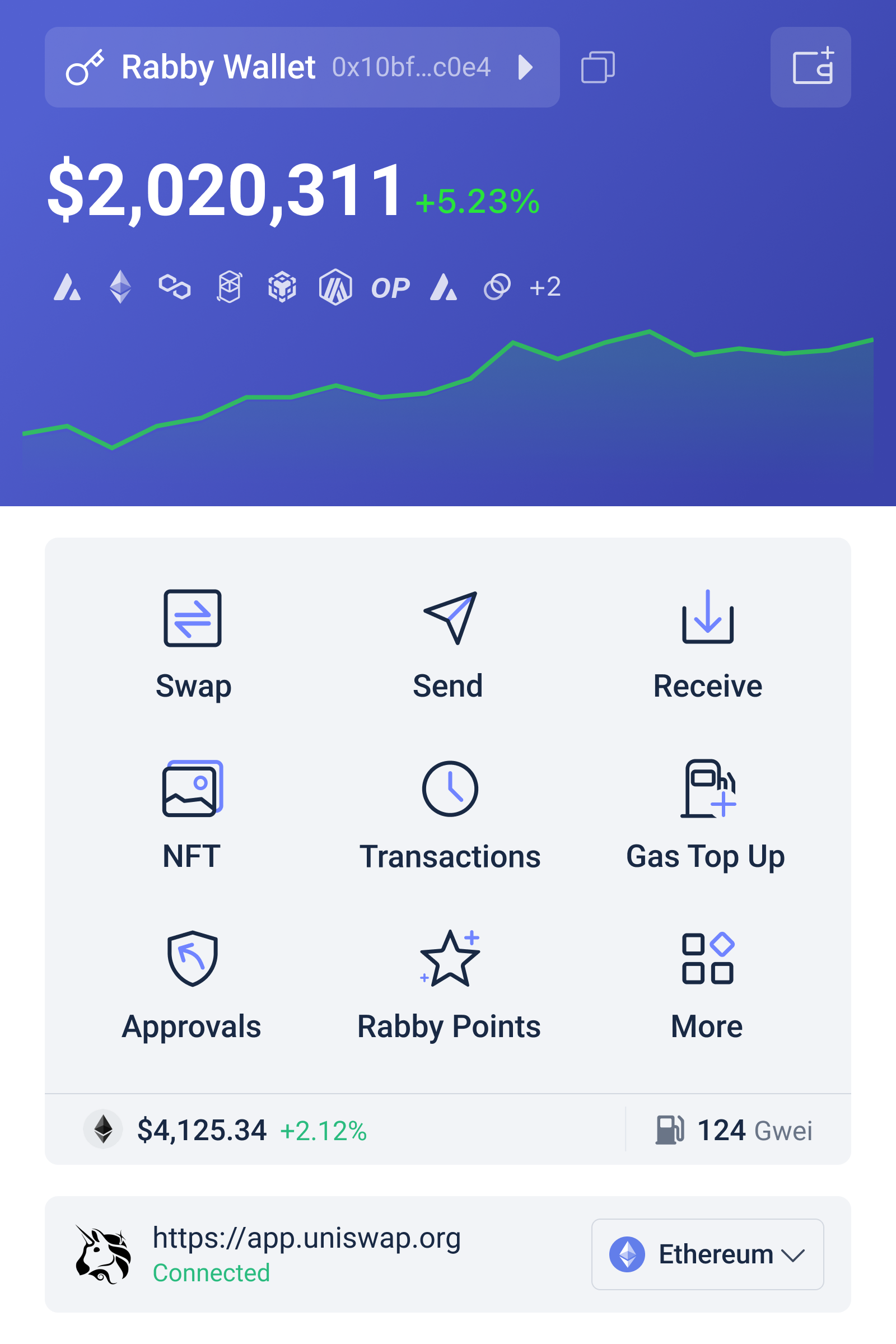
For those who want to try a wallet that focuses on these features, check out https://rabby-wallet.at/ — it’s one example that prioritizes simulation and safer dApp interactions. I’m not endorsing every claim, but it represents the kind of product direction I look for: explicit simulation, clearer permissioning, and multi-chain awareness.
FAQ
Q: How reliable are transaction simulations across different chains?
A: They’re generally reliable for EVM-compatible chains when run against an accurate node snapshot, but there are caveats. Simulation depends on the same mempool and state assumptions. Cross-chain bridging steps are harder to simulate because they involve off-chain relayers and finality differences. Treat simulations as “high-confidence” but still inspect gas and nonce.
Q: Should I always revoke token approvals after using a dApp?
A: For high-risk dApps or one-off interactions, yes. For trusted protocols you use frequently, set finite allowances instead of unlimited approvals. Revoke if you suspect any unusual behavior. There are UI tools and services that make grant/revoke flows easy; use them periodically.
Q: Are hardware wallets necessary for multi-chain use?
A: They’re not strictly necessary, but they greatly reduce key-exposure risk. If you run significant balances or manage a treasury, use a hardware wallet combined with a wallet that supports on-device signing and transaction preview. That balance of usability and security is key.
0 Comments